Loading...
_20261009T114603913Z.png)
Trekking
Double Decker Living Root Bridge Trek: Nongriat Route, 3,500 Steps, Rainbow Falls & Real Difficulty

Team Social Exoticamp
9 Oct 2026
If you have seen photos of Meghalaya, you have probably stopped to stare at an incredible sight.
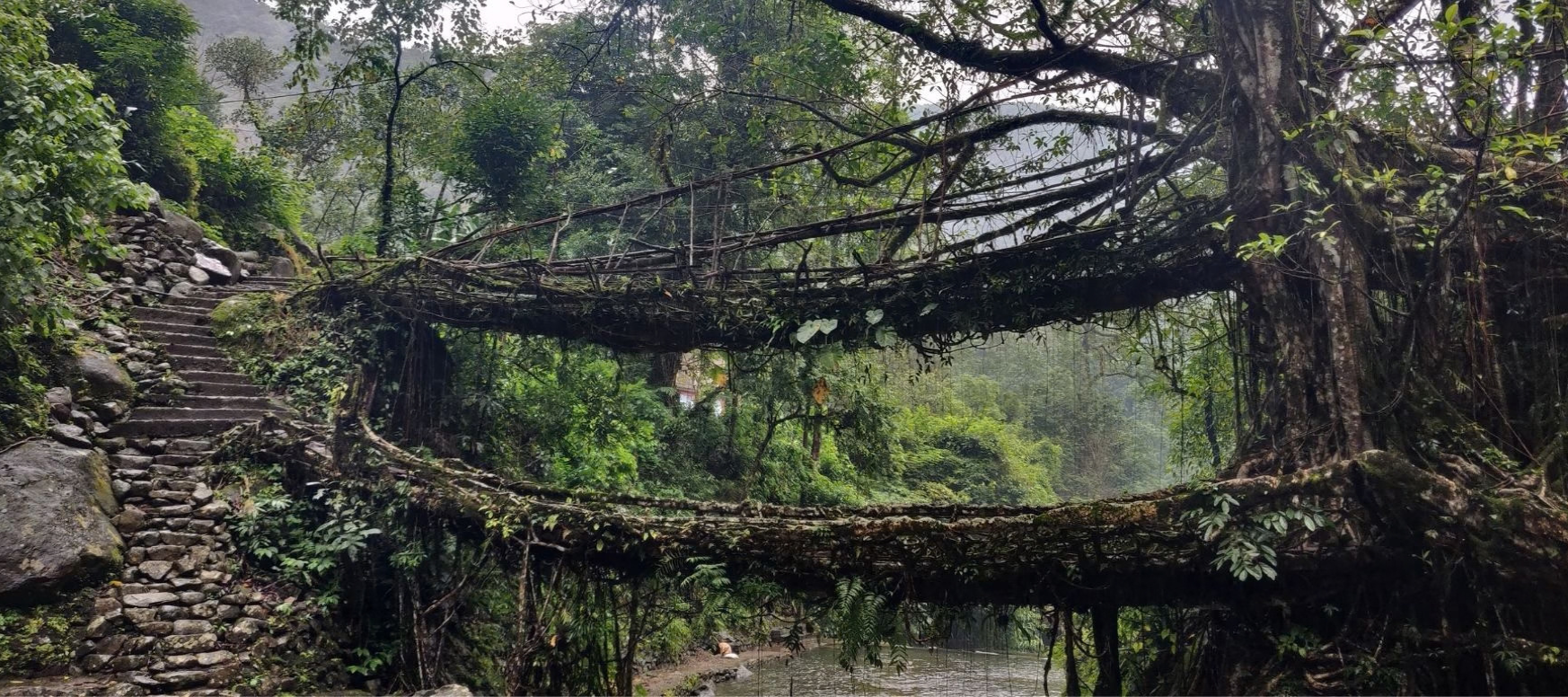
It is an ancient bridge made entirely of living tree roots, crossing right over a clear turquoise stream. That iconic marvel is the Double Decker Living Root Bridge, tucked deep inside the lush valleys of the East Khasi Hills.
The trek to the Double Decker Living Root Bridge in Nongriat is far more than an ordinary hike. It feels like walking straight into a fairytale, shaped over centuries by nature and human skill.
Wondering how tough those steep steps really are? Here is a guide that will break down everything you need to know to conquer the Nongriat trek.
Deep in Meghalaya state, tucked away in Northeast India, centuries of heavy rains and fierce monsoon runoff made conventional wooden or bamboo bridges wash away in weeks.
Rather than fighting nature, the indigenous Khasi people devised a brilliant bio-engineering solution that has fascinated the entire world.
Instead of cutting timber, they guided the strong, pliable aerial roots across roaring torrents using hollowed betel nut trunks. Over decades, these roots intertwined, grew thicker, anchored into rocky banks on the other side, and turned into self-strengthening pathways.
While you will cross a charming single root bridge along the journey, the crown jewel is the legendary Umshiang Double Decker Living Root Bridge (often simply called the Double Decker bridge or Double Decker root bridge).
When monsoons raised water levels high, the original lower bridge became submerged. Local villagers carefully guided a second tier right above it. This living architecture stands as an enduring emblem of tribal innovation, deep harmony with Mother Nature, and cultural heritage.
Planning mountain hikes, sorting out rides, and finding local homestays can be tough to handle alone. With Exoticamp’s Meghalaya Tour, we take care of all the planning so you can just enjoy the hike:
Book your spot on the Exoticamp Meghalaya Trek today!
Your adventure begins in Sohra (Cherrapunji), the misty plateau renowned worldwide for colossal rain showers. From here, hop into local transport, usually a shared or private cab, to make the 40-minute drive down to Tyrna village.
Tyrna is the official trailhead, perched dramatically on the ridge of the gorge. Once you reach Tyrna, you’ll pay nominal entry fees at the village counter. This is also where you can pick up hand-carved bamboo trekking poles for a few rupees, a tool that is highly recommended for saving your knees.
After checking gear and securing water bottles, you start walking down the paved footpath, leaving modern roadways behind and descending straight into the dense wilderness.
Let’s be completely transparent about the Nongriat route: the steep descent is famous for testing your calves right out of the gate. You will navigate roughly 3,500 concrete and stone steps carved into the steep mountainside.
As you descend deeper into the river valley, the sheer scenic beauty takes your breath away. Golden shafts of sunlight pierce through towering trees, cicadas hum their afternoon chorus, and the cool mountain breeze offers brief relief from the humidity.
Before long, the path brings you to thrilling crossings over wild, boulder-strewn waterways. You’ll step onto narrow, high-slung suspension bridges made of steel wire.
As the footbridge sways gently in the breeze with a roaring turquoise river rushing beneath your feet, adrenaline kicks in. After completing the second crossing, the dense greenery opens up to reveal the welcoming outskirts of Nongriat village.
When you finally reach Nongriat, every bit of tiredness in your legs vanishes, replaced entirely by sheer awe. Tucked at the bottom of the valley, this idyllic, pristine small village feels completely sheltered from modern chaos.
A gentle walk along the village pathway brings you face-to-face with the Double Decker living root structure. Seeing the huge Living Root Bridge in person is nothing short of surreal. Thick, moss-draped botanical cables stretch across clear natural pools filled with tiny fish.
Take a well-deserved rest on the smooth river stones. Dip your tired feet into the cool, clear stream for an impromptu natural fish pedicure, sit quietly in the middle of the gorge, and marvel at the centuries of patience woven into this Living Root Bridge.
For most travellers, the Double Decker is the final turnaround point. But if you have energy left in your tank, pushing forward for another 1.5 to 2 hours leads you toward a breathtaking natural amphitheater: Rainbow Falls.
The trail beyond Nongriat turns into a rough, untamed hike over a boulder-strewn, rugged terrain. You’ll follow a roaring aqua-blue stream, hopping over slick river rocks and ascending unpaved forest dirt trails. The last stretch demands patience, but the payoff is magnificent.
Plunging over a sheer cliff face into an iridescent, deep-blue pool, the waterfall produces an intense, perpetual mist.
On bright, sunny afternoons, light refracts through the airborne spray to create a vibrant, actual rainbow arched across the churning waters. Standing before its thunderous power, you'll instantly realize why this extended detour is an absolute highlight of the whole experience.
So, what is the real difficulty of this famous Meghalaya trip hike?
Moderately challenging to strenuous. Anyone with a reasonable baseline of fitness can complete it, provided you pace yourself, take frequent rest stops, and stay hydrated. Hiring friendly local guides not only keeps you on the right route, but also enriches your hike with folk tales and village lore.
While day-trippers often rush down and back up in a single exhausting day, spending the night in Nongriat transforms your journey into something truly magical.
The village features basic homestays run by local families who welcome tourists with warm smiles, piping hot bowls of Maggi, and steaming cups of red tea.
Choosing an overnight stay at a serene homestay allows you to:
Most homestays are a stone's throw from the root bridges, giving you a chance to fall asleep to the symphony of the river and wake up to pure birdsong.
The Double Decker Living Root Bridge trek is far more than a bucket-list workout. It’s an inspiring encounter with human ingenuity, indigenous wisdom, and the raw, untamed spirit of Northeast India.
While those 3,500 steps will certainly test your stamina, every drop of sweat is rewarded a hundred times over by the tranquillity of Nongriat and the roaring majesty of Rainbow Falls.
Ready to lace up your hiking boots and turn this dream trail into reality without any logistical headaches?
Book your dream adventure with Exoticamp’s Meghalaya Trip Package today!
Back
Popular Post
Cellular reception is extremely weak down in the gorge. BSNL occasionally catches sporadic signals, but Airtel and Jio rarely work. Download offline maps and inform family beforehand.
No ATMs exist in Tyrna or Nongriat. Homestays, entry checkpoints, and snack stalls accept cash only, so withdraw sufficient funds earlier in Cherrapunji or Shillong.
October to April offers dry trails, comfortable weather, and clear turquoise waters. Avoid peak monsoon months (June to August), when swollen rivers and slippery stairs increase hazards.
Due to 3,500 steep, uneven stairs each way, it is generally unsuitable for young kids, elderly travellers, or anyone dealing with severe knee or respiratory issues.
Yes, local Khasi porters are available for hire at Tyrna village. They can carry your overnight rucksacks down and back up using traditional conical woven baskets.



_20241220T111256111Z.jpg)
_20240802T132547842Z.jpg)
_20240829T102838750Z.jpg)
